
Not all jokes land the same way. A knock-knock joke that makes a 5-year-old collapse in giggles will get an eye-roll from a teenager. And the witty wordplay that cracks up adults? Completely over a toddler’s head.
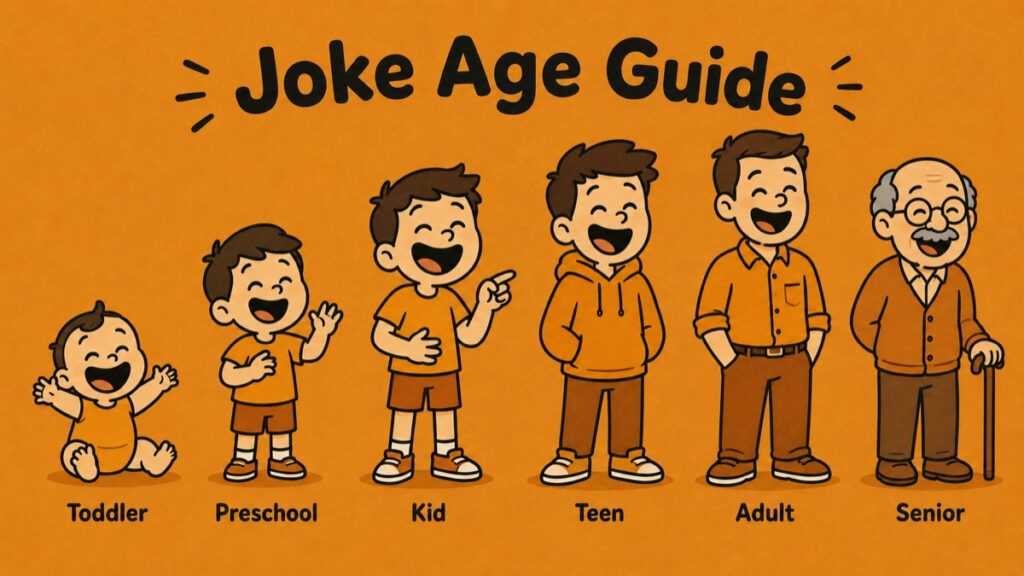
That’s because humor changes as we grow. What we find funny is tied to our cognitive development, life experiences, and social awareness. This guide breaks down what makes each age group laugh — and links you to the best jokes for every stage of life.
Why Humor Changes With Age
Psychologists have studied humor for decades, and here’s what they’ve found: what makes us laugh is directly tied to how our brains process information.
The Science Behind It
Humor relies on something called incongruity — the surprise when something doesn’t match what we expected. But here’s the catch: you need to understand the expectation first to find the twist funny.
- Toddlers (2-3) laugh at physical humor and silly sounds because that’s what their brains can process
- Preschoolers (4-5) start getting simple wordplay and love the predictable format of knock-knock jokes
- School-age kids (6-12) develop the cognitive ability to understand puns, riddles, and jokes with setups and punchlines
- Teens gravitate toward irony, sarcasm, and humor that challenges authority or social norms
- Adults appreciate layered humor, clever wordplay, and jokes that reflect shared life experiences
- Seniors often prefer clean, classic humor and jokes that don’t require cultural references they might miss
The Social Element
Humor isn’t just about the joke — it’s about connection. We laugh harder when we’re with others. Kids use jokes to bond with friends. Teens use humor to fit in (or stand out). Adults use it to break tension at work. Seniors use it to stay connected across generations.
Understanding this helps you pick jokes that actually land.
Jokes for Toddlers (Ages 2-3)
Toddlers don’t understand wordplay yet. Their sense of humor is physical and sensory. They laugh at:
- Funny faces and silly voices
- Animals making wrong sounds (“The cow says… QUACK!” = hilarious)
- Things falling down or popping up unexpectedly
- Simple repetition with a twist
Best joke formats: Very simple call-and-response, animal jokes with sounds, physical comedy
Pro tip for parents: At this age, how you tell the joke matters more than the joke itself. Use big expressions, funny voices, and physical gestures.
Jokes for Preschoolers & Kindergarteners (Ages 4-5)
This is when knock-knock jokes become king. Preschoolers love them because:
- The format is predictable and easy to remember
- They can participate (saying “who’s there?”)
- The punchline is simple enough to understand
- They can retell them to friends and family
Preschoolers are also starting to understand that words can have double meanings, which is why simple puns start working. “Why did the banana go to the doctor? Because it wasn’t peeling well!” makes sense to them now.
Best joke formats: Knock-knock jokes, “Why did the ___?” questions, animal jokes, food jokes
Pro tip: Let kids tell YOU jokes. They’ll mess up the punchlines constantly, but the pride they feel in making you laugh builds confidence.
➔ Browse Jokes for Preschoolers
➔ Knock-Knock Jokes for Preschoolers
Jokes for Kids Ages 6-8
This is the golden age of kid jokes. Kids 6-8 can now:
- Understand wordplay and puns
- Follow setup-punchline structure
- Appreciate “clever” jokes that make them feel smart
- Remember and retell jokes accurately
They also start loving slightly gross humor — not bathroom jokes, but things like skeleton jokes, booger references, and anything a bit rebellious. This is normal development; they’re testing boundaries.
Best joke formats: Q&A jokes, riddles, school jokes, animal jokes, food jokes, holiday jokes
What to avoid: Jokes that require adult knowledge (work, relationships, politics) or cultural references they won’t get.
➔ Browse 200+ Jokes for Kids
➔ Jokes for 5 Year Olds
➔ Jokes for 6 Year Olds
➔ Silly Jokes for Kids
➔ Jokes for 7 Year Olds
➔ Jokes for 8 Year Olds
Jokes for Tweens (Ages 9-12)
Tweens are in a tricky spot. They think they’re too old for “kid jokes” but aren’t ready for adult humor. They want jokes that feel clever and sophisticated.
This age group responds well to:
- Puns that require thinking (“I’m reading a book about anti-gravity. It’s impossible to put down.”)
- School and teacher jokes (relatable daily life)
- Jokes about siblings, parents, and family dynamics
- Light sarcasm and irony (they’re starting to get it)
- Pop culture references they recognize
What’s changing: Kids this age start using humor socially — to fit in, to seem cool, to get attention. The jokes they like are often the ones they can share with friends.
➔ Jokes for 10 Year Olds
➔ Jokes for Tweens
➔ Jokes for Middle Schoolers
Jokes for Teens (Ages 13-17)
Teenage humor is sharp, ironic, and often self-aware. Teens use humor to:
- Bond with peers
- Challenge authority (gently mocking teachers, parents, rules)
- Process the awkwardness of adolescence
- Seem clever and “in the know”
They’re drawn to:
- Sarcasm and dry wit — “I’m not lazy, I’m on energy-saving mode”
- Self-deprecating humor — jokes about their own struggles (school, sleep, social anxiety)
- Anti-jokes — jokes that subvert expectations by NOT being funny in the traditional way
- Meme-style humor — quick, punchy, shareable
What doesn’t work: Anything that feels “try-hard” or like adults are trying to be cool. Keep it authentic.
➔ Browse 100+ Jokes for Teens
➔ Jokes for High School Students
Jokes for Adults
Adult humor spans a huge range, but the clean adult humor that works in most situations includes:
- Observational comedy — jokes about everyday life, relationships, work, parenting
- Clever wordplay — puns and double meanings that require a moment to “get”
- Dad jokes — groan-worthy puns that are so bad they’re good
- Self-deprecating humor — jokes about aging, memory, responsibilities
- Situational humor — jokes about work meetings, traffic, technology struggles
Adults appreciate jokes with layers — humor that rewards thinking. They also appreciate jokes they can share in mixed company (work, family gatherings, social events) without worrying about appropriateness.
➔ Browse Clean Jokes for Adults
➔ 300 Dad Jokes
➔ Jokes for Work
Jokes for Seniors
Seniors often prefer classic, clean humor that doesn’t rely on current pop culture or technology references they might not follow. The best jokes for this age group:
- Use timeless formats (Q&A, simple puns, classic setups)
- Don’t require knowledge of social media, current celebrities, or tech trends
- Can include gentle, respectful humor about aging (memory, retirement, grandkids)
- Feel familiar and comfortable rather than edgy or shocking
Why humor matters for seniors: Research shows that laughter provides real health benefits for older adults — reducing stress, improving mood, and strengthening social connections. Jokes are a simple way to brighten someone’s day.
➔ Browse Jokes for Seniors
➔ Retirement Jokes
➔ Jokes for Grandparents
Jokes for the Workplace
Workplace humor walks a fine line. You want to lighten the mood without crossing into inappropriate territory. The best work jokes are:
- 100% clean — nothing that could be HR-flagged
- Relatable — about meetings, Mondays, coffee, emails, deadlines
- Quick — one-liners work better than long setups in professional settings
- Inclusive — nothing that targets specific groups or individuals
Good workplace humor can break tension, build rapport, and make you more likable. Bad workplace humor can end careers. When in doubt, stick to dad jokes — they’re groan-worthy but always safe.
➔ Browse Jokes for Work
➔ Clean Dad Jokes for Work
➔ Icebreaker Jokes for Meetings
How to Pick the Right Jokes
Use this quick guide:
| Age Group | Best Formats | Topics They Love |
|---|---|---|
| Toddlers | Physical humor, silly sounds | Animals, food, surprises |
| Preschool | Knock-knocks, simple Q&A | Animals, food, colors |
| Kids 6-8 | Puns, riddles, Q&A | School, animals, food, gross stuff |
| Tweens | Clever puns, wordplay | School, pop culture, family |
| Teens | Sarcasm, irony, anti-jokes | School, social life, self-deprecation |
| Adults | Wordplay, observational | Work, parenting, relationships |
| Seniors | Classic formats, clean puns | Timeless topics, aging humor |
Frequently Asked Questions
What age do kids start understanding jokes?
Kids start understanding simple humor around age 2-3, but they don’t truly “get” joke structure (setup + punchline) until around age 6. Before that, they laugh at physical humor, silly sounds, and surprise.
Why do kids want to tell the same joke over and over?
Repetition is how kids process and master new information. When they tell a joke multiple times, they’re practicing the structure, building confidence, and enjoying the reliable response. It’s completely normal (even if exhausting for parents).
Are dad jokes actually scientifically funny?
Psychologists say dad jokes work because of “benign violation theory” — they violate our expectations (with a bad pun) but in a harmless way. The groan is actually a form of laughter. Dad jokes also signal safety and warmth, which is why they’re associated with fatherly bonding.
What jokes work for mixed-age groups?
When you have a mixed audience (like a family gathering), stick to clean puns, animal jokes, and classic formats. Avoid anything that requires specific knowledge (pop culture, tech, work situations). The safest bets: animal jokes, food jokes, and timeless knock-knocks.
Why do teens roll their eyes at jokes?
Teens are developing their identity separate from their parents. Eye-rolling at “parent jokes” is a way of asserting independence. Don’t take it personally — they’re still listening, and studies show they often share those same jokes with their friends later.
Do seniors prefer certain types of humor?
Research suggests older adults often prefer humor that’s affiliative (bringing people together) rather than aggressive or edgy. They also tend to enjoy nostalgia-based humor and jokes that don’t require knowledge of current trends.
Browse All Joke Collections
By Age
- Jokes for Toddlers
- Jokes for Preschoolers
- Jokes for Kids (Main Collection)
- Jokes for 7 Year Olds
- Jokes for 10 Year Olds
- Jokes for Tweens
- Jokes for Teens
- Jokes for Adults
- Jokes for Seniors
By Setting
- Jokes for Work
- Back to School Jokes
- Icebreaker Jokes
By Type
Can’t decide? Start with our most popular collection:
200+ Jokes for Kids That Are Actually Funny
Want one for right this second? Grab today’s pick from our joke of the day for kids, a new clean joke every day of the year.